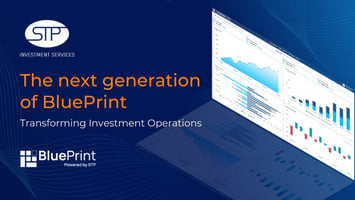
A powerful tool that represents a step-change in data management and operational efficiency for...
Real-time analytics is becoming a foundational capability in modern middle office operations.
As investment strategies grow more complex and operating models scale, the ability to see, interpret, and act on data as events unfold is critical to maintaining
control.
Yet “real-time” is often misunderstood. Speed alone does not produce better decisions. What matters is how timely data is structured, contextualized, and embedded into the day-to-day workflows that middle office teams rely on to manage risk, resolve breaks, and support the front office.
What Real-Time Analytics Means in the Middle Office
In middle office operations, real-time analytics refers to the continuous ingestion, processing, and visualization of data across the trade lifecycle as activity occurs. This commonly includes:
-
Intra-day positions and exposures
-
Cash movements and funding visibility
-
Trade status and settlement progress
-
Reconciliation state and exception aging
-
P&L and performance drivers
The defining characteristic is not simply refresh frequency, but operational relevance. Effective real-time analytics surfaces issues in context—highlighting where attention is required, what has changed, and what downstream impact may follow if action is delayed.
Why Real-Time Analytics Has Become Operationally Critical
1. Earlier Risk Detection, Fewer Downstream Issues
In a batch-driven environment, issues often surface hours—or days—after they are introduced. By then, errors have propagated across systems, making root cause analysis slower and more costly.
Real-time visibility allows middle office teams to identify breaks, mismatches, or exposure anomalies as they occur, reducing both financial risk and operational noise. The value is less about speed for its own sake and more about intervening before small issues compound.
2. Supporting Faster Decision Cycles
Portfolio and trading teams increasingly expect timely insight into exposures, liquidity, and P&L. When middle office data becomes a bottleneck, it constrains decision-making upstream.
Real-time analytics in the middle office enables operations to act as an information accelerator, translating raw transaction data into reliable intraday insight that supports the front office without sacrificing control.
3. Scaling Without Linear Headcount Growth
As products, counterparties, and volumes increase, manual monitoring and spreadsheet-driven analysis breakdown.
A real-time analytics approach allows middle office teams to scale by exception rather than by volume—focusing attention where it matters, instead of increasing staff to manage growing data sets.
Core Capabilities That Matter in Practice
When evaluating real-time analytics solutions for the middle office, the most important capabilities tend to be operational rather than visual.
Deep Integration with Middle Office Systems
Analytics are only as reliable as their source data. A viable solution must integrate directly with core middle office systems such as OMS/EMS platforms, positions engines, custodians, and pricing feeds.
Superficial data aggregation creates latency and inconsistency. Tight, system-level integration enables analytics that reflect actual operational state—not interpretations layered on top of delayed data.
Automated Exception Identification
The strongest analytics platforms do more than display information; they direct attention.
Real-time detection of failed trades, reconciliation breaks, unsettled cash, or exposure thresholds allow teams to prioritize resolution efforts immediately, rather than relying on static reports or manual checks.
Role-Specific Views
Middle office stakeholders do not consume data the same way.
Operations teams may focus on settlement and reconciliation status, while performance teams care about exposure and P&L drivers. A flexible analytics framework allows these views to be configured without duplicating data or creating parallel reporting processes.
Traceability to Source Activity
Operational analytics must be explainable. Every metric, position, or alert should be traceable back to the underlying transactions and valuations that produced it.
This traceability is essential not only for confidence in the data, but also for efficient issue resolution. Analytics that cannot be reconciled to their source add noise rather than clarity.
Architecture Built for Continuous Processing
Real-time insight requires infrastructure designed for continuous data flow. Platforms built for batch reporting often struggle to deliver low-latency, high-volume analytics without performance trade-offs.
Cloud-native architectures, event-driven processing, and scalable data models are increasingly necessary to support intraday visibility across asset classes and strategies.
Where Real-Time Analytics Breaks Down
Many analytics initiatives fail not because of technology, but because they are detached from workflow.
Business intelligence tools that sit outside the middle office operating model can display attractive dashboards while still forcing teams to resolve issues elsewhere. The result is fragmented processes, duplicated controls, and inconsistent views of “the truth.”
The most effective implementations embed analytics directly into operational flows—where breaks are resolved, trades are managed, and positions are validated—so insight and action remain tightly coupled.
Key Questions to Ask When Evaluating Solutions
Middle office leaders evaluating real-time analytics should press beyond surface capabilities and ask:
1. How current is the data—really?
-
Is information refreshed based on actual events, or on scheduled extracts?
2. What operational logic is built in?
-
Does the system understand trade states, settlements, and position lifecycle, or is it merely aggregating fields?
3. How are exceptions defined and prioritized?
-
Are alerts meaningful, or do they create additional noise?
4. Can teams self-serve without breaking controls?
-
Flexibility should not come at the expense of data integrity.
Real-Time Analytics as a Middle Office Operating Model
Real-time analytics is no longer a reporting enhancement; it is becoming a core middle-office capability.
As firms push toward faster decision cycles and greater operational scale, delayed and fragmented data models increasingly act as a constraint. By contrast, analytics that are timely, contextual, and embedded into operational workflows enable teams to manage complexity with confidence.
The firms that benefit most are those that view real-time analytics not as a dashboarding project, but as part of how the middle office functions day to day—turning data into action as events unfold.